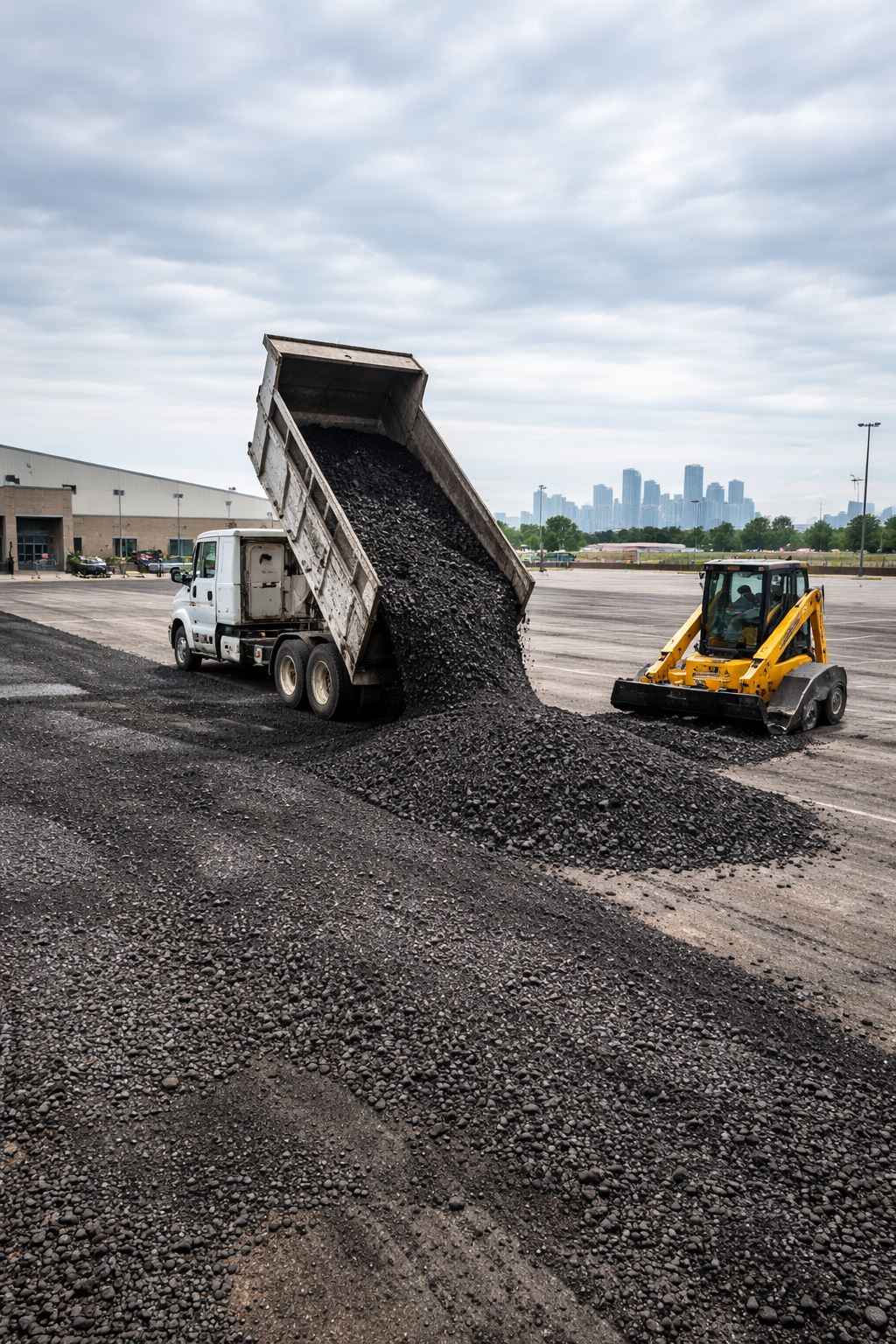

For contractors sourcing dirt, sand, gravel, and aggregates, the decision often comes down to Borrow-Pit vs Traditional Material Suppliers. But this isn’t simply about choosing between two locations; it’s about choosing between two sourcing models.
Traditional material suppliers operate physical yards where materials are stocked and sold directly to buyers. Borrow-Pit, by contrast, functions as a sourcing platform that connects contractors with local material owners and bulk suppliers.
Understanding how these two approaches differ can significantly impact pricing transparency, hauling distance, and overall project efficiency, especially in large markets like Houston and across Harris County.
Understanding the Sourcing Models
When evaluating Borrow-Pit vs Traditional Material Suppliers, the first difference is structure.
Traditional suppliers:
- Operate fixed yard locations
- Maintain on-site inventory
- Apply markup to cover overhead and storage
- Sell directly from their stock
Borrow-Pit:
- Connects buyers with local material sources
- Aggregates listings from multiple suppliers
- Allows contractors to compare proximity and volume
- Reduces reliance on a single yard location
Instead of being limited to one physical yard, contractors using Borrow-Pit can evaluate multiple supply points near their job site. In a metro area as large as Houston, stretching from Katy to Baytown and The Woodlands to Pearland, that flexibility can significantly reduce hauling distance.
You can learn more about how the platform operates and its sourcing approach on the About page.
Cost Comparison: Platform vs Physical Yard
When evaluating Borrow-Pit vs Traditional Material Suppliers, cost goes beyond the price per cubic yard. It also includes handling, storage, markup, and hauling distance. Understanding how each sourcing model structures pricing helps contractors make smarter decisions, especially on large projects where small differences add up fast.
1. Material Pricing Transparency
In the Borrow-Pit vs Traditional Material Suppliers comparison, pricing structure is a key differentiator.
Traditional suppliers typically:
- Purchase material from pits or quarries
- Transport it to their yard
- Store and process it
- Add markup to cover overhead
Borrow-Pit reduces layers by allowing contractors to connect directly with local bulk material sources. This can improve pricing transparency and allow buyers to evaluate bulk fill dirt pricing across multiple suppliers at once.
Instead of calling several yards individually, contractors can review available listings and compare options based on quantity and location.
2. Hauling Distance and Delivery Costs
Hauling distance is one of the largest cost drivers in construction logistics. According to the U.S. Energy Information Administration (EIA), diesel fuel costs fluctuate regularly, directly impacting construction material delivery costs.
In the Borrow-Pit vs Traditional Material Suppliers comparison, proximity matters:
- A traditional supplier may be 25-30 miles from your job site.
- Borrow-Pit may connect you with a source only 8-12 miles away.
For projects along I-10, SH 99, Beltway 8, or US-290, even small mileage reductions significantly lower fuel consumption and driver labor time.
For large subdivision grading or commercial pad work requiring hundreds of loads, those savings compound quickly.
Convenience and Supply Chain Efficiency
Beyond pricing, convenience is crucial in construction logistics. Delays, limited supply, or slow turnaround times can disrupt a project. Comparing Borrow-Pit and traditional suppliers highlights key differences in sourcing flexibility and operations.
Broader Regional Coverage
Traditional suppliers are limited to their yard inventory and location. If their stock runs low, delays can occur.
Borrow-Pit expands sourcing visibility by allowing contractors to compare supplies across a broader region. This improves supply chain efficiency and reduces reliance on a single distribution point.
In the Borrow-Pit vs Traditional Material Suppliers comparison, this flexibility is especially valuable for:
- Large commercial developments
- Infrastructure projects
- Phased construction schedules
- Emergency material needs
Instead of waiting for one supplier to restock, contractors can explore alternative nearby listings.
Communication and Coordination
Traditional suppliers typically require phone-based coordination and manual quote requests.
Borrow-Pit streamlines this by centralizing listings and enabling contractors to evaluate options before initiating contact. For project-specific coordination or delivery scheduling questions, reaching out through the Contact page allows direct communication regarding volume and timing.
This structure supports faster decision-making, particularly for bulk dirt supplier near me searches where time is critical.
When Traditional Suppliers May Be the Better Fit
While the Borrow-Pit vs Traditional Material Suppliers model often favors broader sourcing flexibility, traditional suppliers may still make sense for:
- Small, immediate pickup orders
- Specialty or decorative materials
- Contractors working near a specific yard location
- Projects requiring highly processed aggregates
Retail yards may offer convenience for minor quantities or walk-in purchases.
When Borrow-Pit Creates a Competitive Advantage
For bulk material sourcing, especially in large-scale projects across Greater Houston, Borrow-Pit provides advantages in:
- Comparing multiple local aggregate suppliers
- Reducing hauling distance impact
- Increasing price transparency
- Improving contractor cost reduction strategies
- Supporting large-volume earthwork
The Borrow-Pit vs Traditional Material Suppliers discussion becomes especially relevant when:
- Projects require thousands of cubic yards
- Delivery cost is a major factor
- Fuel prices are rising
- Scheduling flexibility is essential
Rather than relying on a single yard’s inventory, contractors gain access to a broader regional network.
Long-Term Cost Efficiency
Construction logistics go beyond price per yard. Trucking and fuel costs, turnaround times, and job site proximity all affect final project cost.
In the Borrow-Pit vs Traditional Material Suppliers comparison, a sourcing platform model often provides:
- Greater flexibility
- Reduced dependency on one location
- Better regional material visibility
- Improved cost control for bulk deliveries
In fast-growing markets like Houston and Harris County, this flexibility can help contractors maintain margins in competitive bidding environments.
Final Thoughts on Borrow-Pit vs Traditional Material Suppliers
The choice between Borrow-Pit vs Traditional Material Suppliers ultimately depends on project size, material type, and logistical priorities.
Traditional suppliers offer fixed-location convenience and retail-style service. Borrow-Pit provides a broader sourcing network that allows contractors to compare local supply options, reduce hauling distance, and improve pricing transparency.
For bulk dirt, aggregates, and high-volume earthwork projects, evaluating multiple nearby sources can significantly lower total delivered cost.
If you’re comparing sourcing strategies, you can search listings near you to explore available material options. If you manage bulk materials and want to connect with buyers, you can also list your material through the platform.
FAQs
What is the difference between Borrow-Pit and a traditional supplier?
Borrow-Pit is a sourcing platform connecting buyers with local material suppliers, while traditional suppliers operate physical yards selling from on-site inventory.
Is Borrow-Pit cheaper than traditional suppliers?
For bulk projects, it can offer cost savings by increasing supplier visibility and reducing hauling distance.
Does Borrow-Pit handle delivery?
Delivery coordination depends on the individual supplier listing, allowing contractors to evaluate logistics on a case-by-case basis.
When should I use a traditional supplier instead?
For small pickup orders or specialty processed materials, a local yard may be more convenient.
Which option is better for large earthwork projects?
For high-volume jobs, comparing multiple local supply points through a sourcing platform often improves total cost efficiency.