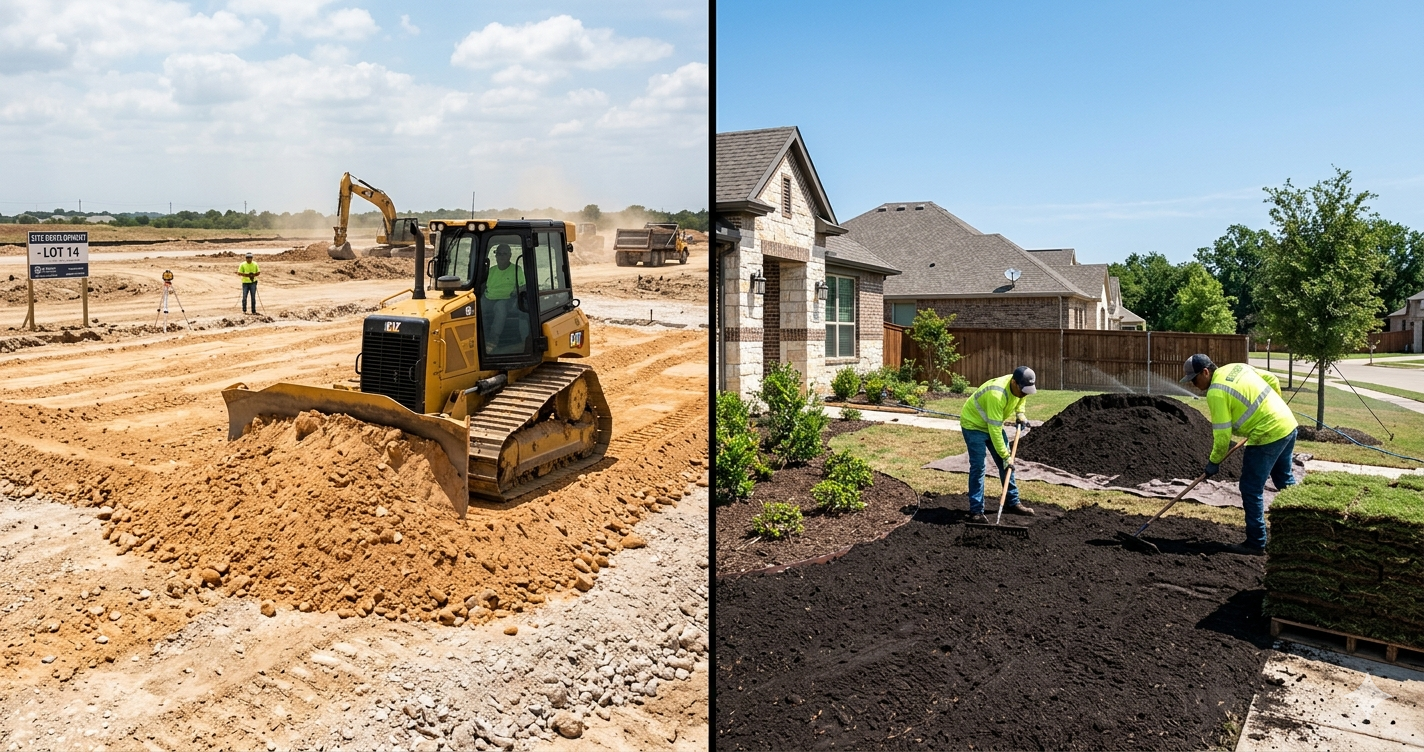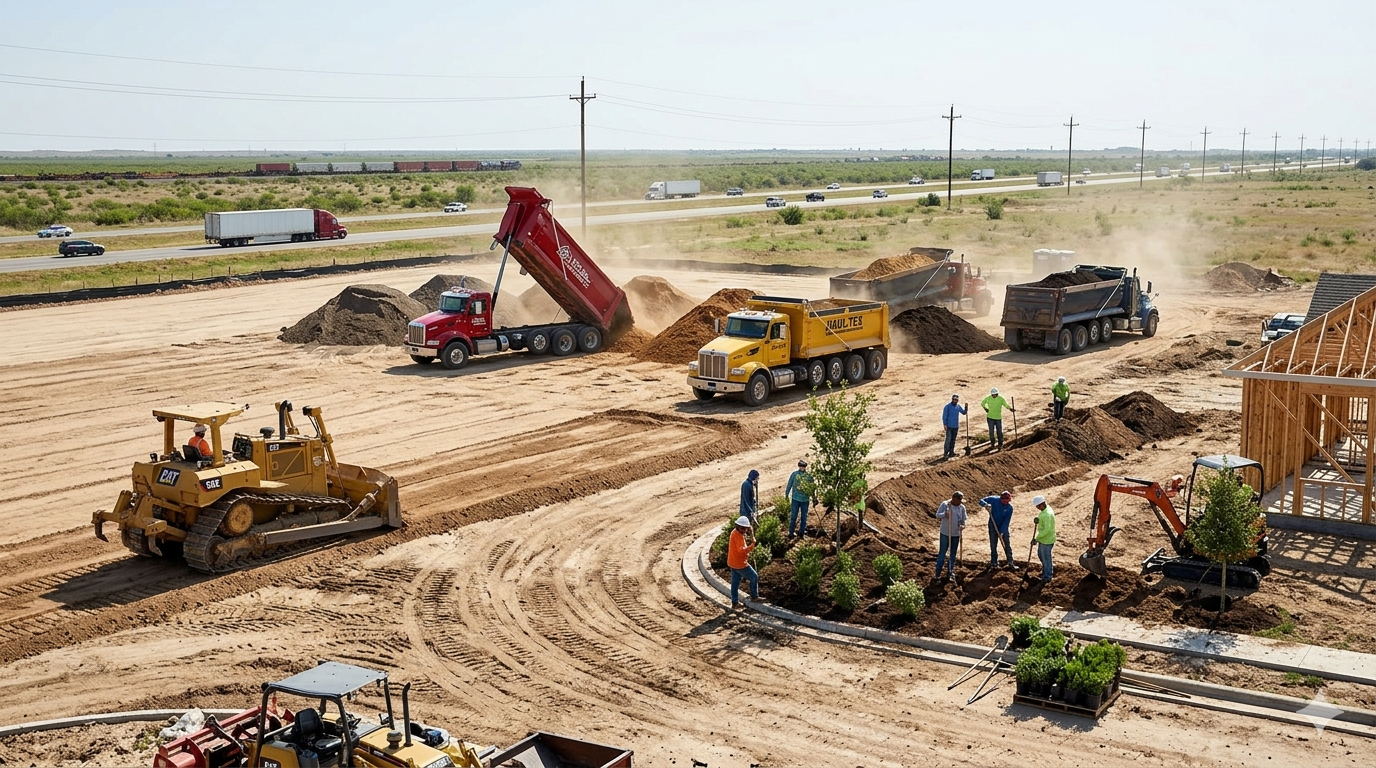
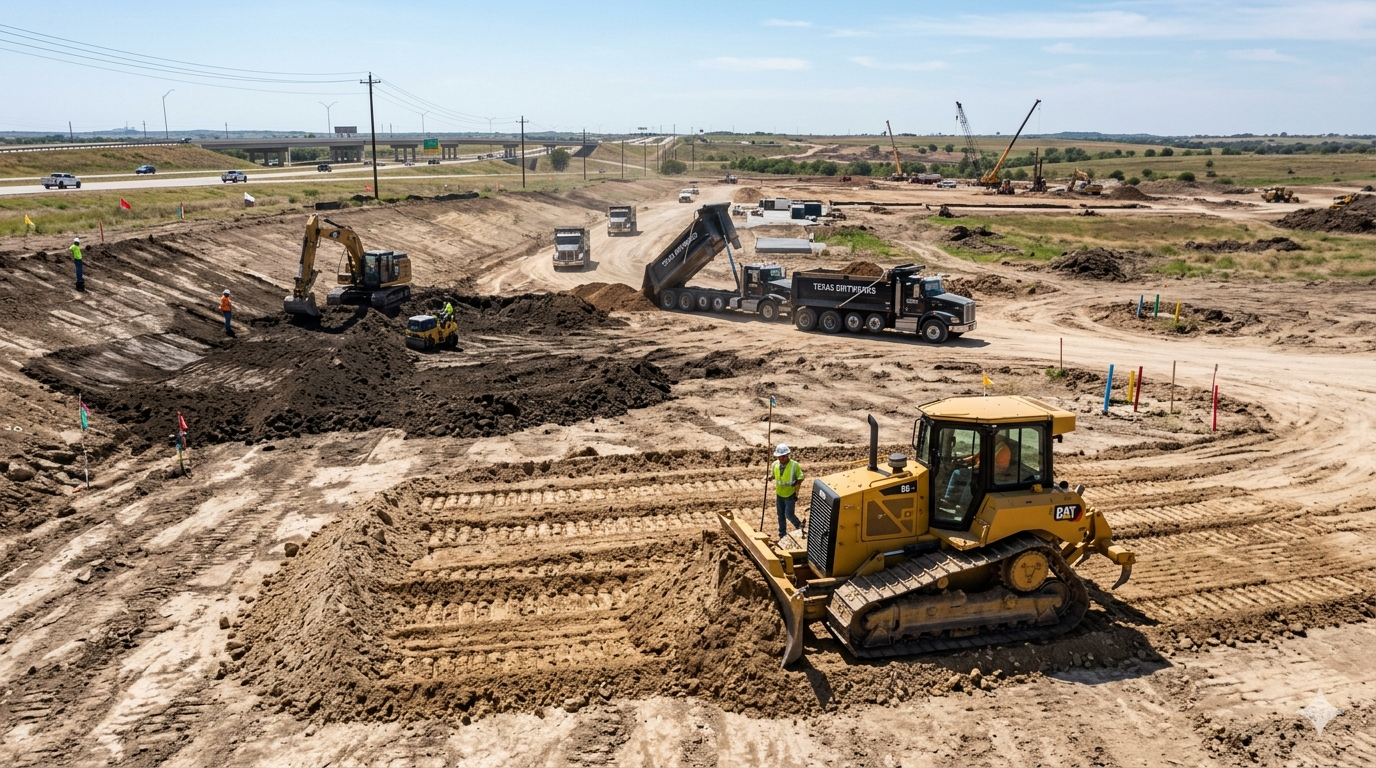
Across the state, fill dirt in Texas construction projects plays a much bigger role than many property owners realize. While it may seem like a basic material, contractors rely on fill dirt for everything from raising building pads to correcting drainage and stabilizing access roads. In fast-growing markets like Dallas–Fort Worth, Houston, San Antonio, and Austin, the right fill material can directly affect schedule, compaction performance, and total earthwork cost.
If you’re planning commercial site prep, subdivision development, utility work, or even large residential grading, understanding the most common uses of fill dirt in Texas construction projects helps you choose the right material before delivery. In Texas, where expansive clay soils, heavy rain events, and large project footprints are common, fill dirt is often the first material that shapes a site’s long-term performance.
Why Fill Dirt Matters in Texas Construction
When contractors use fill dirt in Texas construction projects, they are usually focused on structure, not finish. Fill dirt is typically low in organic matter and better suited for compaction than topsoil. That makes it a practical material for grade correction, load-bearing support, and base preparation.
Because Texas construction often involves slab-on-grade foundations, roadway access, drainage control, and land development across uneven terrain, fill dirt becomes a core part of site preparation. The Texas Department of Transportation’s earthwork guidance consistently emphasizes the importance of proper fill placement and compaction in embankments, pads, and roadway work. While many private projects are smaller than state infrastructure jobs, the same principles still apply.
This is why fill dirt in Texas construction projects remains one of the most frequently sourced bulk materials across both urban and rural development zones.
Building Pad and Foundation Preparation
One of the most common uses of fill dirt in Texas construction projects is for building pads.
Before a slab, metal building, warehouse, or home foundation can be poured, the site often needs to be elevated and leveled. Contractors use fill dirt to create a stable base that can be compacted in lifts. This is especially common in growth corridors near I-35, Loop 1604, I-10, and the outer suburban edges of Houston and DFW, where raw land is frequently being converted into residential or commercial use.
Why Compaction Is Critical
In this type of work, the value of fill dirt comes from its ability to compact consistently. Topsoil or highly organic soil can settle over time, causing movement under slabs or structural loads.
That’s why builders often choose fill dirt for:
- Residential slab prep
- Commercial building pads
- Shop and warehouse foundations
- Detached garage or barn pads
When evaluating fill dirt in Texas construction projects, this is often the first and most important application.
Rough Grading and Site Leveling
Another major use of fill dirt in Texas construction projects is rough grading. Before a site is ready for utilities, paving, or finish work, the ground is usually shaped to match the engineering plans.
Creating Proper Site Elevation
Texas properties often have low spots, slope changes, or drainage issues that require correction before construction can proceed. Fill dirt is used to raise sections of a site, establish elevation, and create a more workable grade for future phases.
This is common on:
- Subdivision development sites
- Commercial retail pads
- Industrial yards
- Rural acreage improvements
- School and municipal expansion projects
In areas around Katy, New Braunfels, or the outskirts of Fort Worth, rough grading can involve significant material volumes. That’s why buyers looking for fill dirt in Texas construction projects usually prioritize proximity and truck access as much as price.
Road Base Support and Access Roads
Temporary and semi-permanent access roads are another practical reason contractors buy fill dirt.
On many Texas job sites, especially in undeveloped or semi-rural areas, heavy equipment cannot operate efficiently until a stable path is established. Fill dirt is often used to build up subgrade areas before crushed concrete, road base, or gravel is added.
Supporting Heavy Equipment Traffic
Moving loaders, excavators, and concrete trucks across wet or uneven ground can damage the site and slow production. Fill dirt helps create a more stable working surface before finish aggregates are installed.
This is particularly useful for:
- Temporary construction entrances
- Haul road subgrades
- Equipment laydown areas
- Utility corridor access routes
According to the Federal Highway Administration’s geotechnical and embankment references, stable subgrade conditions are essential for roadways and heavily used surfaces. That same concept applies to private construction staging in Texas.
For contractors comparing supply options, the Borrow-Pit dirt listings category can be useful for sourcing fill dirt near active job sites, rather than relying on a single distant supplier.
Drainage Correction and Low Area Fill
Texas weather can shift from drought to heavy rain quickly, which makes drainage correction one of the most overlooked uses of fill dirt.
Many contractors use fill dirt in Texas construction projects to raise low areas that collect water, improve runoff direction, and prevent standing water near structures. This is common in both commercial and residential work, especially in flood-prone or poorly graded areas.
Improving Site Water Movement
Low areas near foundations, parking lots, or undeveloped lots can create erosion, mud problems, and long-term maintenance issues. Fill dirt helps reshape the land so water moves away from structures and toward designated drainage paths.
Projects that often need this include:
- Backyard regrading
- Lot elevation correction
- Drainage swale shaping
- Perimeter grading around buildings
In regions like Southeast Texas and along the Gulf Coast, drainage performance can be just as important as structural compaction.
Utility Backfill and Trench Support
In some cases, fill dirt in Texas construction projects is also used for utility trench backfill, depending on local engineering requirements and the type of line being installed.
Not every trench should be backfilled with standard fill dirt. Still, for non-structural or larger open utility areas, it may be part of the material plan. Contractors should always confirm whether select fill, screened soil, or imported aggregate is required instead.
If you’re comparing available materials or trying to understand how bulk listings are organized, the About page offers a good overview of how Borrow-Pit works. And if you need help with material availability or listing coordination, you can reach out through the Contact page.
Final Thoughts
The most common uses of fill dirt in Texas construction projects all come back to one core purpose: creating stable, workable ground. Whether the job involves building pad prep, rough grading, access road support, drainage correction, or trench backfill, fill dirt remains one of the most practical and widely used bulk materials in Texas construction.
The key is choosing the right type of fill for the job and sourcing it from a supplier close enough to keep hauling costs under control. In a state as large as Texas, distance can quickly change delivered pricing, especially when multiple truckloads are involved.
If you’re planning a project and need material fast, you can search listings near you to compare available supply. And if you have excess soil or reusable material from excavation or grading work, you can also list your material to connect with contractors looking for local fill.
FAQs
What is fill dirt used for in Texas construction projects?
Fill dirt is commonly used for building pads, rough grading, low-area fill, drainage correction, access roads, and some utility backfill applications.
Is fill dirt good for foundations?
Yes, fill dirt is often used under foundations and slabs when it is properly placed and compacted in lifts.
Can fill dirt be used for drainage correction?
Yes. Contractors often use fill dirt to raise low spots and reshape the grade, so water drains away from structures.
Is fill dirt the same as topsoil?
No. Fill dirt usually has less organic matter and is better suited for compaction. At the same time, topsoil is used for planting and landscaping.
How do I find fill dirt suppliers in Texas?
You can compare regional listings, local suppliers, and nearby borrow pit sources to reduce hauling distance and improve delivered pricing.