If you’re comparing fill dirt vs topsoil in Texas, the right choice depends less on price and more on what the material actually needs to do. Contractors, landscapers, and property owners across Texas often assume soil is interchangeable, but using the wrong material can lead to drainage problems, weak compaction, or poor plant growth.
From building pad prep in San Antonio to yard grading in Houston and landscaping upgrades in Dallas-Fort Worth, knowing the difference between fill dirt vs topsoil in Texas can save time and prevent costly rework. One is built for structure and elevation. The other is designed to support vegetation and surface finish. If you’re planning site prep, drainage correction, or a landscaping project, understanding this comparison is essential before you order bulk soil.
Understanding Fill Dirt vs Topsoil in Texas
When evaluating fill dirt vs topsoil in Texas, the first thing to understand is composition. These materials may look similar when delivered in bulk, but they serve very different purposes.
Fill dirt is usually taken from below the top organic layer of the ground. It contains little to no organic matter and is often made up of clay, sand, silt, or a mix of mineral-based soil. Because it has low organic content, it compacts more effectively and is commonly used in construction.
Topsoil, on the other hand, is the uppermost layer of soil. It contains organic matter, nutrients, roots, and decomposed plant material. That makes it better for grass, planting beds, and finished landscape surfaces, but less reliable for structural support.
According to the USDA Natural Resources Conservation Service (nrcs.usda.gov), topsoil is biologically active and nutrient-rich, which is exactly why it behaves differently from structural fill. That distinction matters when choosing between fill dirt vs topsoil in Texas for construction or landscaping.
When to Use Fill Dirt in Texas Projects
If your project requires stability, compaction, or grade correction, fill dirt is usually the right material.
Best for Construction, Grading, and Elevation
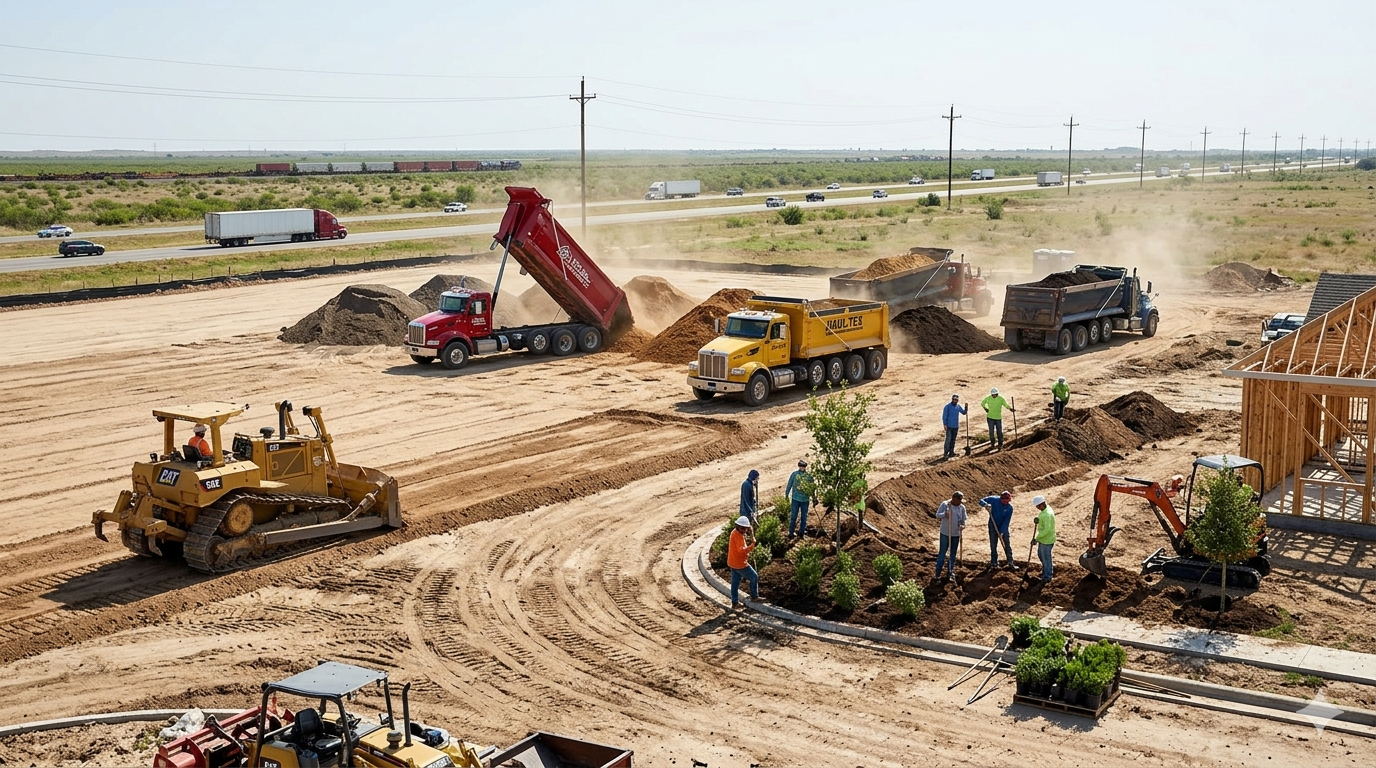
Contractors often choose fill dirt when they need to raise a site, build up low spots, or support a structure. In many parts of Texas, especially around fast-growing corridors near I-35, I-10, and SH 99, fill dirt is a core part of site preparation before foundations, access roads, and slab work begin.
Common uses for fill dirt include:
- Building pad preparation
- Rough grading for subdivisions
- Leveling uneven acreage
- Filling depressions or low areas
- Supporting driveways and access routes
- Base work before topsoil or finish materials are added
This is where the fill dirt vs topsoil in Texas comparison becomes clear: if the material needs to compact and stay stable under weight, topsoil is usually the wrong choice.
Why Fill Dirt Performs Better Structurally
Because fill dirt has less organic material, it settles more predictably. Organic matter decomposes over time, which can create voids and shifting. For that reason, topsoil is rarely ideal under slabs, patios, retaining wall bases, or other load-bearing surfaces.
The Texas Department of Transportation’s earthwork standards consistently emphasize material suitability and compaction in roadway and embankment applications. While residential projects are smaller in scale, the principle is the same: structural work requires stable fill.
When Topsoil Is the Better Choice
Topsoil shines when the project is focused on surface finish, planting, or lawn establishment rather than compaction.
Best for Landscaping and Surface Growth
If you’re installing sod, seeding a lawn, creating garden beds, or improving surface soil conditions, topsoil is usually the better option. In the fill dirt vs topsoil in Texas decision, topsoil is the material that supports root growth, nutrient retention, and moisture balance.
It’s commonly used for:
- Lawn installation
- Flower beds and gardens
- Tree and shrub planting
- Surface grading before sod
- Finishing over compacted fill dirt
For many Texas residential projects, the best solution is not choosing one over the other, but using both in the right order.
A Layered Approach Often Works Best
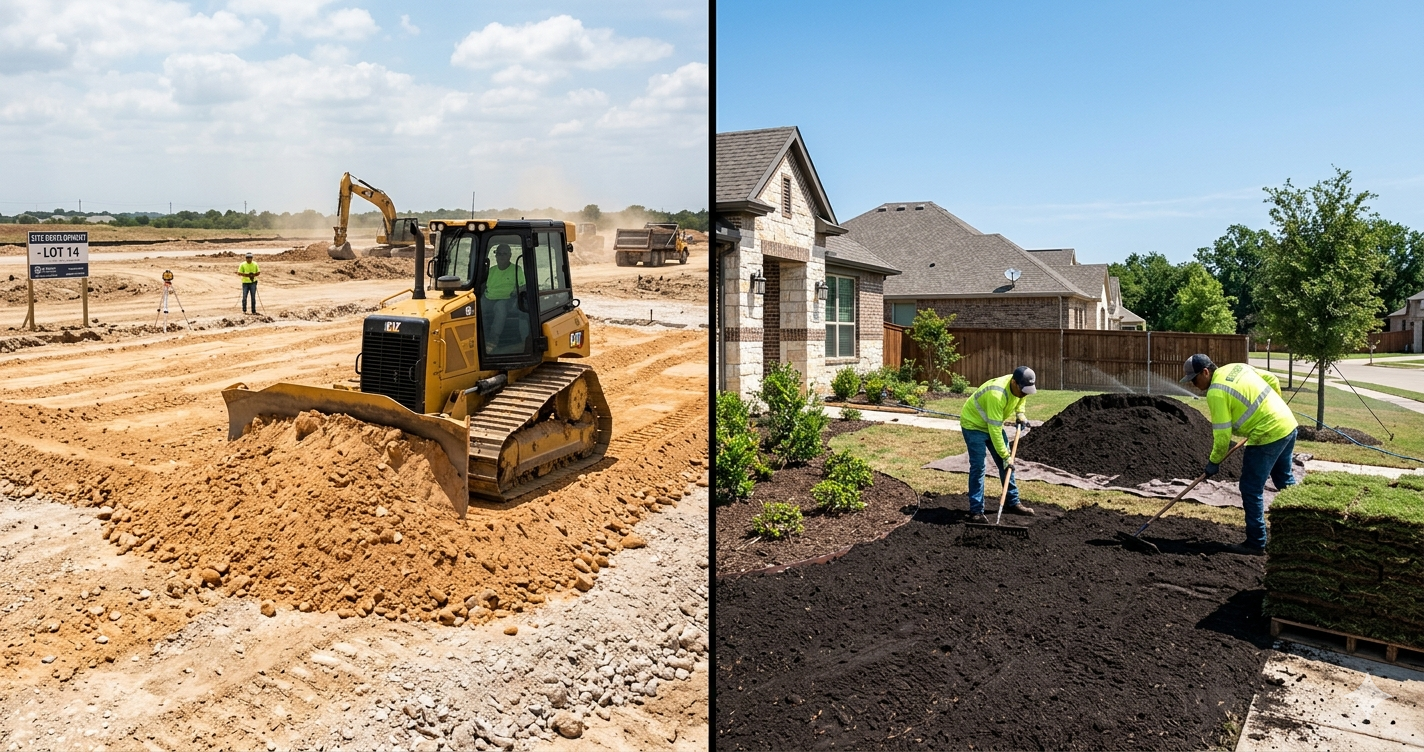
Many successful landscaping and site improvement projects start with fill dirt to establish elevation, then finish with topsoil on the surface. For example, if a homeowner in Austin or Fort Worth needs to regrade a backyard, they may use fill dirt to raise and shape the area, then apply topsoil on top to support sod or planting.
That’s often the most practical answer to fill dirt vs topsoil in Texas: use fill dirt for structure, then topsoil for growth.
Cost Differences: Fill Dirt vs Topsoil in Texas
Price also plays a role, but it should never be the only factor.
In most markets, fill dirt is less expensive because it is more abundant and less processed. Topsoil often costs more because it may be screened, blended, or selected for better texture and organic content. When buyers compare fill dirt vs topsoil in Texas, topsoil usually carries the higher per-load price.
However, the delivered cost depends on:
- Hauling distance
- Material availability by region
- Load size and truck type
- Whether the material is screened or unscreened
- Local demand in active construction zones
A lower base price from a distant source may still cost more than a nearby supplier.
How to Choose the Right Material Before Ordering
If you’re still deciding between fill dirt vs topsoil in Texas, ask one simple question: is the material supposed to support weight or support growth?
If the answer is structural support, choose fill dirt. If the answer is plant growth or surface finish, choose topsoil.
If your project involves multiple phases, it often makes sense to compare both through the Borrow-Pit dirt listings category so you can evaluate what is available near your site. If you want to understand more about how the platform works for buyers and suppliers, the About page provides a helpful overview. And if you need help coordinating a listing or asking about availability, you can reach out through the Contact page.
That kind of comparison is especially useful for projects that mix grading, drainage correction, and final landscaping in one schedule.
Final Thoughts
The best way to think about fill dirt vs topsoil in Texas is function first, price second. Fill dirt is built for grading, elevation, and compaction. Topsoil is built for planting, lawns, and surface-level landscaping. Using one in place of the other can lead to poor results, whether that means unstable site prep or a lawn that struggles to establish.
For contractors and property owners across Texas, the smartest approach is to match the soil to the task. If you need structural base material, buy fill dirt. If you need a growing medium, buy topsoil. And if your project requires both, combine them strategically for the best long-term outcome.
When you’re ready to compare options, you can search listings near you to find available materials by region. If you have excess soil or reusable material from a project, you can also list your material and connect with local buyers.
FAQs
What is the main difference between fill dirt and topsoil?
Fill dirt has little organic matter and is used for compaction and grading, while topsoil contains nutrients and organic content for planting and landscaping.
Can I use topsoil instead of fill dirt?
Not for structural applications. Topsoil is not ideal under foundations, slabs, or heavy-load areas because it can settle as organic matter breaks down.
Is fill dirt good for grass?
Not by itself. Fill dirt can be used to shape and level the ground, but topsoil should usually be added on top before planting grass or installing sod.
Which is cheaper in Texas, fill dirt or topsoil?
Fill dirt is usually less expensive than topsoil, but delivered cost depends heavily on hauling distance and local availability.
Should I use both fill dirt and topsoil for yard leveling?
Yes, in many cases. Fill dirt is often used to raise and shape the area, then topsoil is added as the final layer for planting or sod.