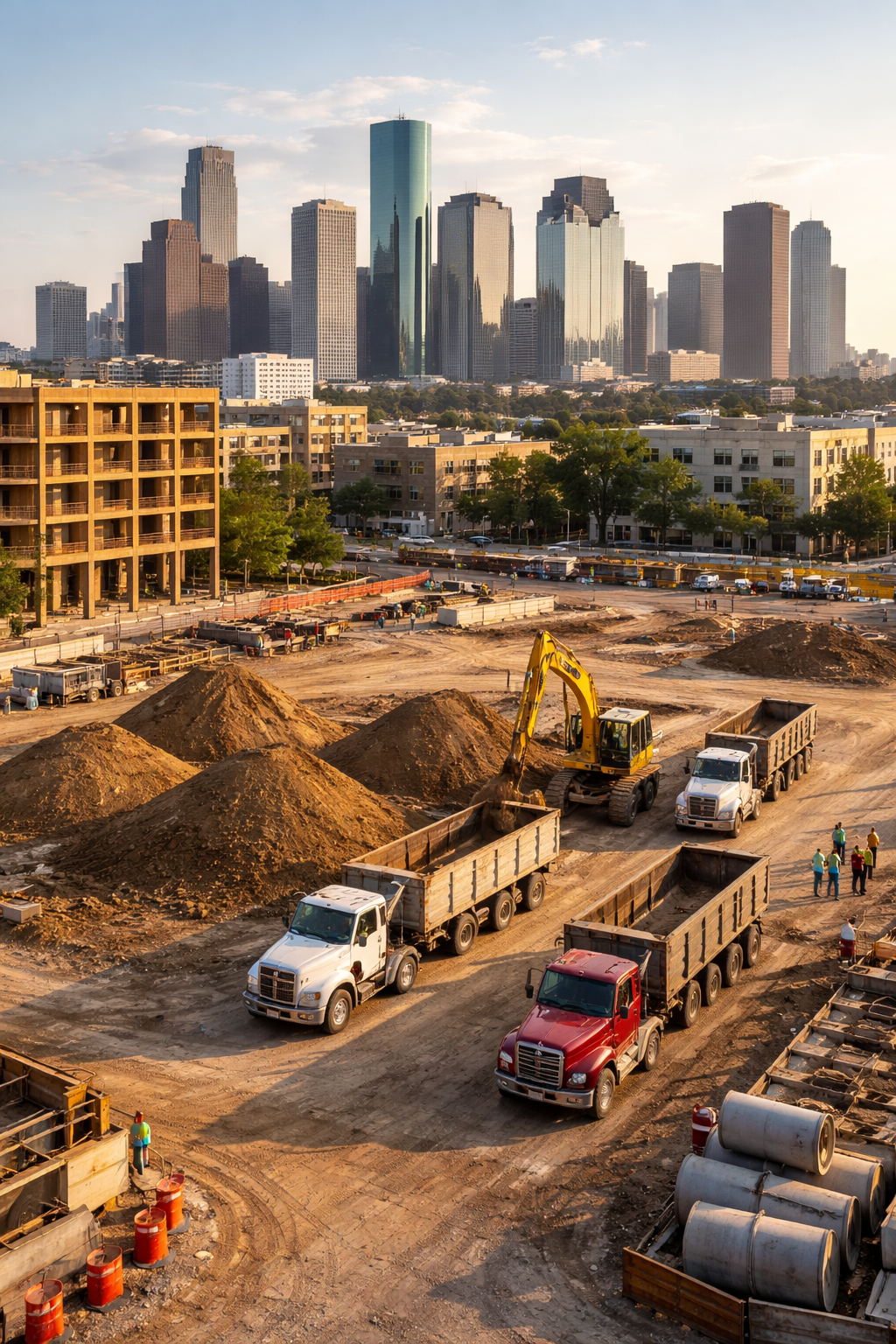
Flooding isn’t a rare event in Houston, it’s a planning reality. From heavy Gulf Coast rainfall to flat terrain and clay-based soils, managing water properly is critical for long-term property stability. That’s why selecting the right materials for flood control and drainage projects in Houston is not just about compliance, it’s about protection.
Whether you’re building a commercial warehouse near Beltway 8, stabilizing a residential property in Katy, or improving stormwater flow in Cypress, using proper flood control materials Houston contractors trust can make all the difference. The success of drainage systems depends heavily on aggregate selection, compaction strategy, and site grading.
Let’s break down the most effective materials for flood control and drainage projects in Houston, and where they fit best.
Why Material Selection Matters in Houston’s Climate
Houston receives significant annual rainfall, and many areas sit near sea level. Combined with expansive clay soils, water retention becomes a serious concern. Without proper drainage materials Houston TX builders rely on, properties are vulnerable to erosion, foundation movement, and standing water.
Stormwater management materials Houston contractors use must:
- Allow water to flow freely
- Resist erosion under heavy rainfall
- Provide structural stability
- Comply with local drainage guidelines
Contractors working within city limits often review stormwater standards through the City of Houston Public Works to ensure drainage designs meet municipal requirements. For county projects, the Harris County Flood Control District provides floodplain and detention guidance.
Understanding these local conditions helps determine which bulk aggregate for drainage projects performs best.
Gravel for Drainage: The Foundation of Water Flow
One of the most commonly used materials in flood control and drainage projects in Houston is gravel. Its permeability allows water to move quickly through the base layer rather than pooling at the surface.
Gravel for drainage Houston applications is frequently used in:
- French drains
- Retaining wall backfill
- Foundation perimeter drains
- Parking lot sub-bases
Crushed limestone and washed gravel both work well depending on compaction requirements. In commercial builds along I-10 and US-59, contractors often combine gravel with geotextile fabric to improve long-term performance.
Because Houston soil tends to trap moisture, gravel creates a controlled channel for water movement, reducing hydrostatic pressure around foundations.
Crushed Concrete for Drainage and Base Stability
Recycled aggregate has become increasingly popular in flood control and drainage projects in Houston. Crushed concrete for drainage Houston contractors use offers both drainage capability and load-bearing strength.
It’s commonly applied in:
- Industrial driveways
- Access roads
- Equipment yards
- Large commercial pads
Crushed concrete compacts tightly while still allowing moderate water movement. That makes it ideal for heavy-use areas in industrial zones near the Port of Houston or along Highway 290.
Using recycled materials also supports sustainability efforts, aligning with erosion control solutions for Houston properties that aim to reduce environmental impact.
Riprap Stone for Erosion Protection
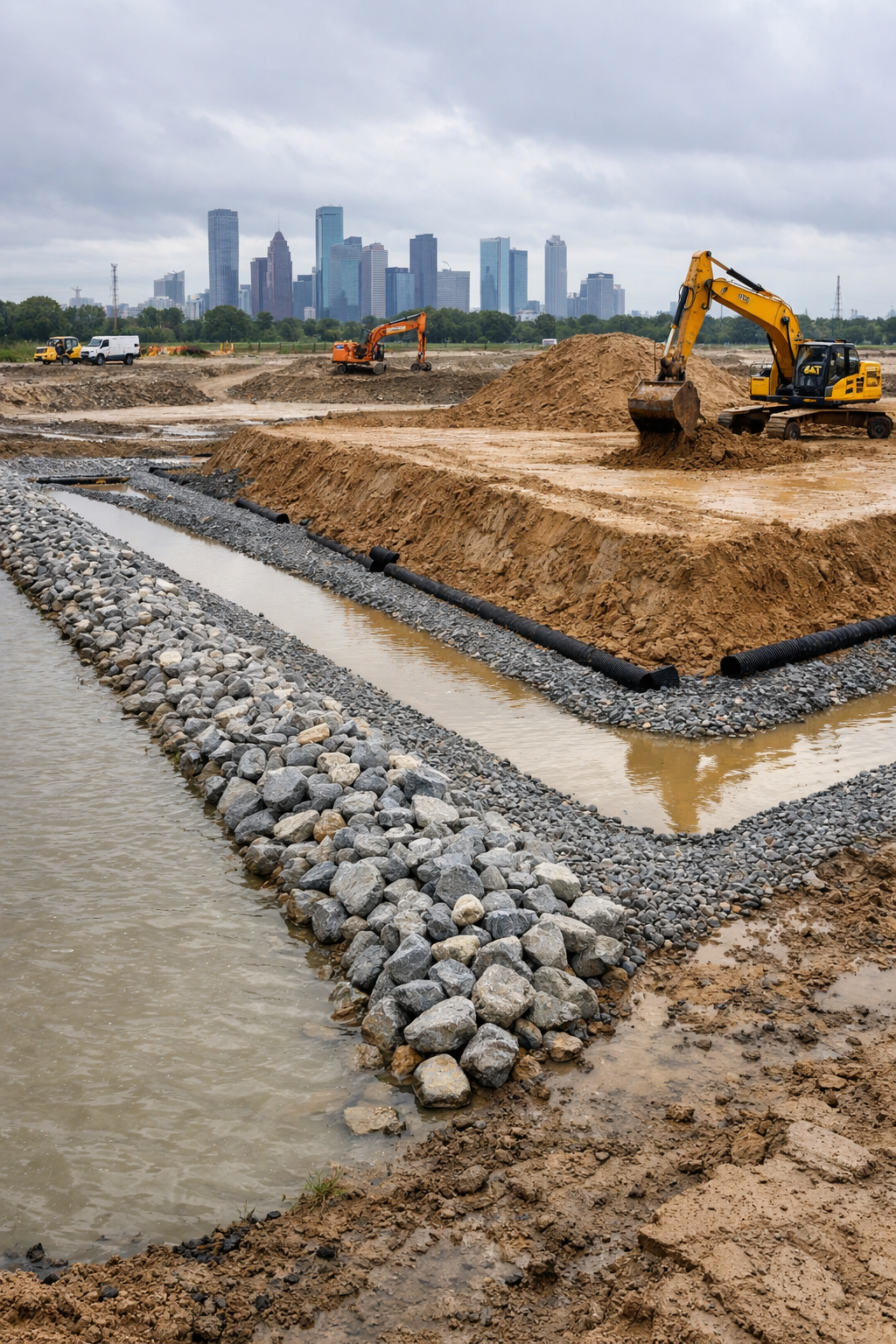
When water moves fast, erosion becomes the primary threat. Riprap stone Houston TX suppliers provide large, angular rock designed to slow water velocity and protect embankments.
Riprap delivery Houston TX is common for:
- Detention pond slopes
- Drainage channel linings
- Creek bank stabilization
- Culvert outlets
Areas near Buffalo Bayou, Brays Bayou, and other waterways rely heavily on riprap for flood mitigation. Its size and weight prevent soil displacement during heavy storm events.
For contractors managing large-scale flood control and drainage projects in Houston, riprap remains one of the most effective erosion control materials Houston offers.
Fill Dirt for Elevation and Flood Mitigation
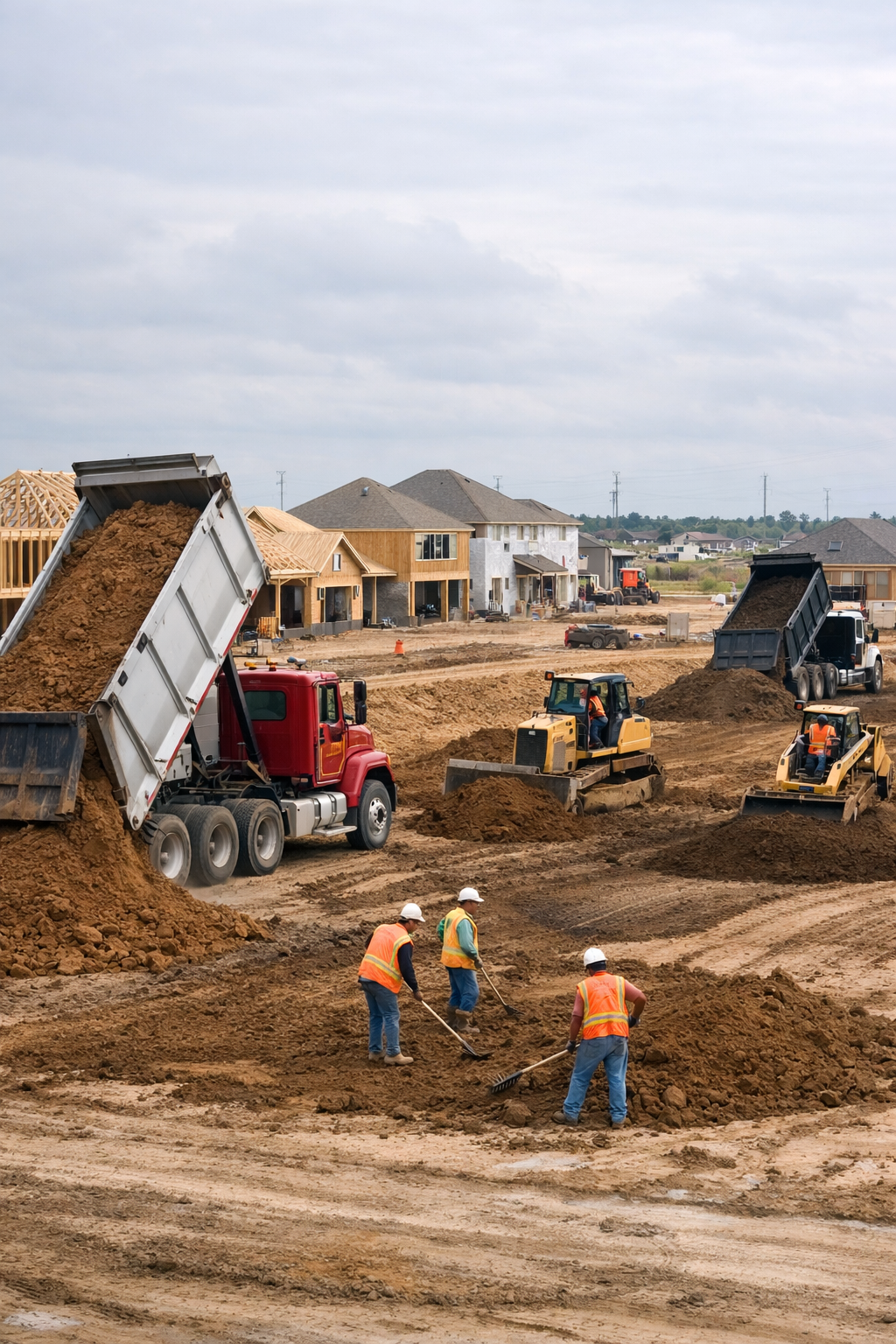
In many Houston neighborhoods, the solution isn’t just redirecting water, it’s raising the property itself. Fill dirt for flood control Houston applications helps elevate building pads above base flood elevation requirements.
Commercial drainage solutions Houston developers use often include:
- Select fill dirt for building pads
- Compacted fill for site grading
- Layered soil elevation adjustments
Bulk materials for flood prevention Houston TX projects must compact properly to prevent settlement. Select fill dirt is typically preferred because it provides consistent composition and structural stability.
When sourcing materials for flood control and drainage projects in Houston, contractors can explore supplier options through platforms like Borrow-Pit. You can learn more about sourcing through the About page or coordinate material inquiries through the Contact page.
Stormwater Detention and Aggregate Blends
Modern commercial projects in Houston frequently require engineered stormwater detention systems. These systems rely on layered aggregate installations to manage runoff effectively.
Stormwater management materials Houston contractors use may include:
- Washed stone layers for infiltration
- Sand-gravel blends for filtration
- Structural fill for basin walls
Developments near expanding areas like The Woodlands and Sugar Land often incorporate advanced drainage systems due to strict local regulations.
Combining materials strategically ensures that flood control and drainage projects in Houston remain durable under extreme weather conditions.
Choosing the Right Supplier and Volume Strategy
Timing and logistics matter just as much as material selection. Contractors often search for drainage gravel supplier Houston options that can provide bulk delivery without delays.
To manage costs effectively:
- Source locally to reduce hauling distance
- Schedule phased deliveries
- Confirm compaction specs before ordering
- Align material choice with engineering plans
Bulk aggregate for drainage projects becomes significantly more cost-effective when purchased in volume. For large commercial or municipal builds, coordination with suppliers is critical.
Find Materials or Offer Supply for Houston Drainage Projects
If you’re planning flood control and drainage projects in Houston, sourcing the right aggregates locally can make a major difference in both cost and scheduling. You can search listings near you to compare available gravel, riprap, fill dirt, and other drainage materials from regional suppliers.
If your project has excess aggregate, stone, or fill material, you can also list your material and connect directly with contractors who need bulk supply for upcoming drainage and flood mitigation work across the Houston area.
Building Smarter Against Houston Flood Risks
Flooding is part of Houston’s reality but poor preparation doesn’t have to be. Choosing the right materials for flood control and drainage projects in Houston protects infrastructure, reduces long-term maintenance costs, and improves property resilience.
From gravel for drainage Houston foundations to riprap stone Houston TX erosion protection and engineered fill dirt elevation strategies, each material plays a role. The key is matching the material to site conditions and project goals.
Contractors and property owners who plan proactively, source strategically, and coordinate with reliable suppliers position themselves for long-term success. If you’re planning a drainage or flood mitigation project, explore available materials near your site and connect with suppliers who understand Houston’s unique environmental challenges.
Frequently Asked Questions
1. What are the best materials for flood control and drainage projects in Houston?
Gravel, crushed concrete, riprap stone, and select fill dirt are among the most effective materials depending on site conditions.
2. Why is gravel commonly used in Houston drainage systems?
Gravel allows water to flow freely, reducing surface pooling and protecting foundations.
3. Is crushed concrete suitable for drainage?
Yes. Crushed concrete provides structural strength while allowing moderate water movement, making it useful for heavy-use areas.
4. When should riprap stone be used?
Riprap is ideal for areas exposed to fast-moving water, such as detention ponds and drainage channels.
5. Does raising a property with fill dirt help prevent flooding?
Yes. Elevating building pads above flood levels is a common strategy in flood-prone areas of Houston.