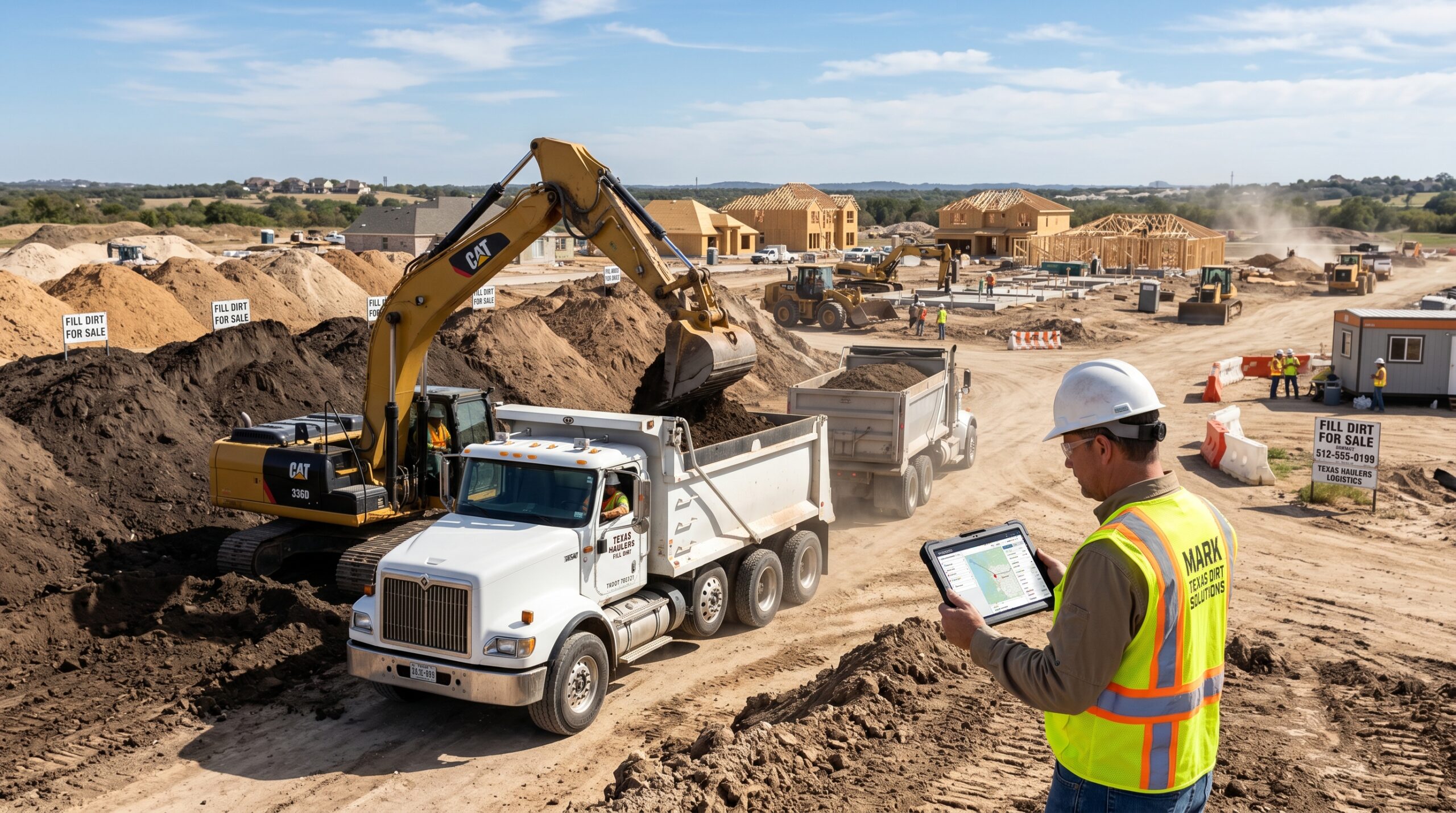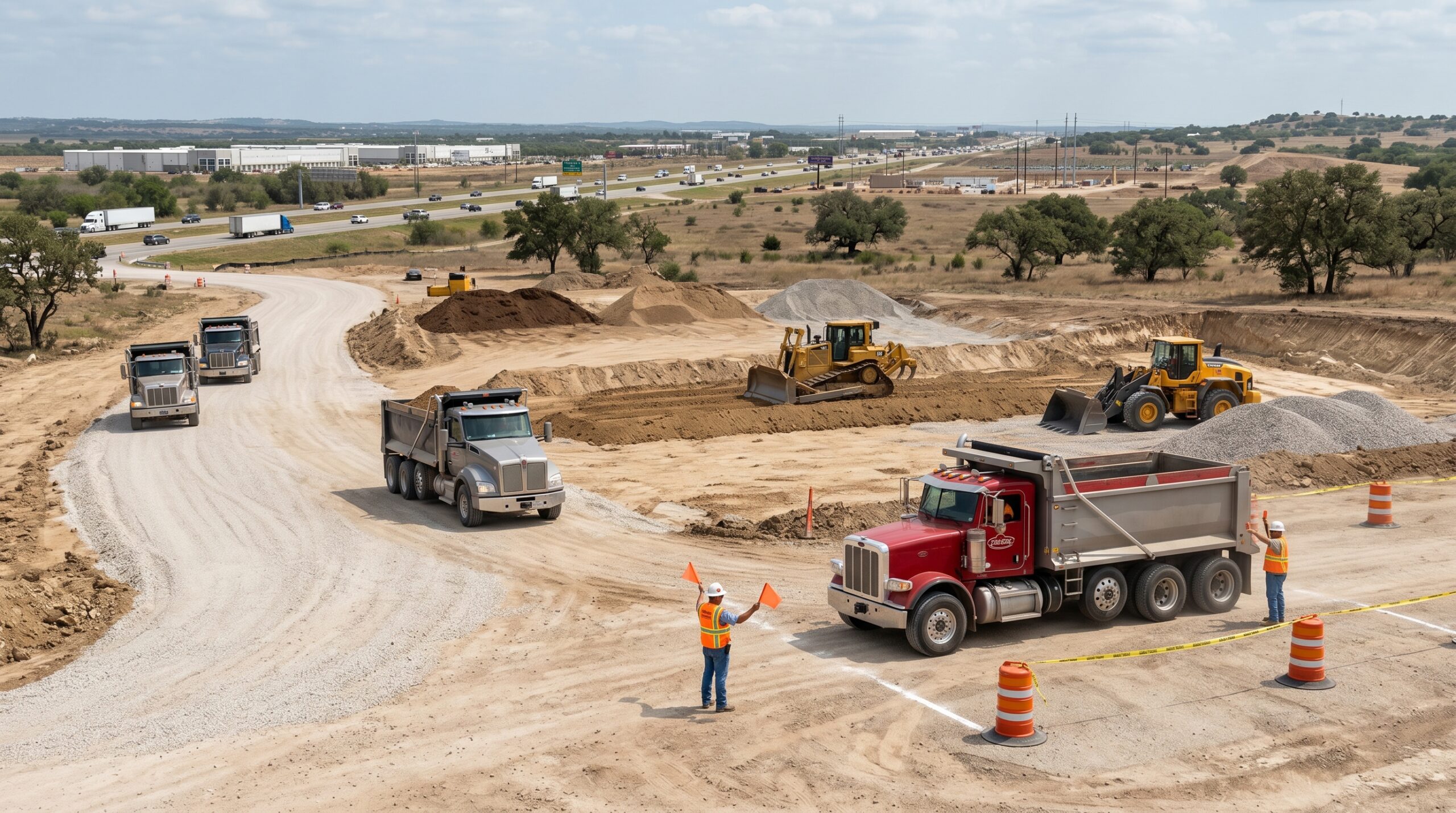
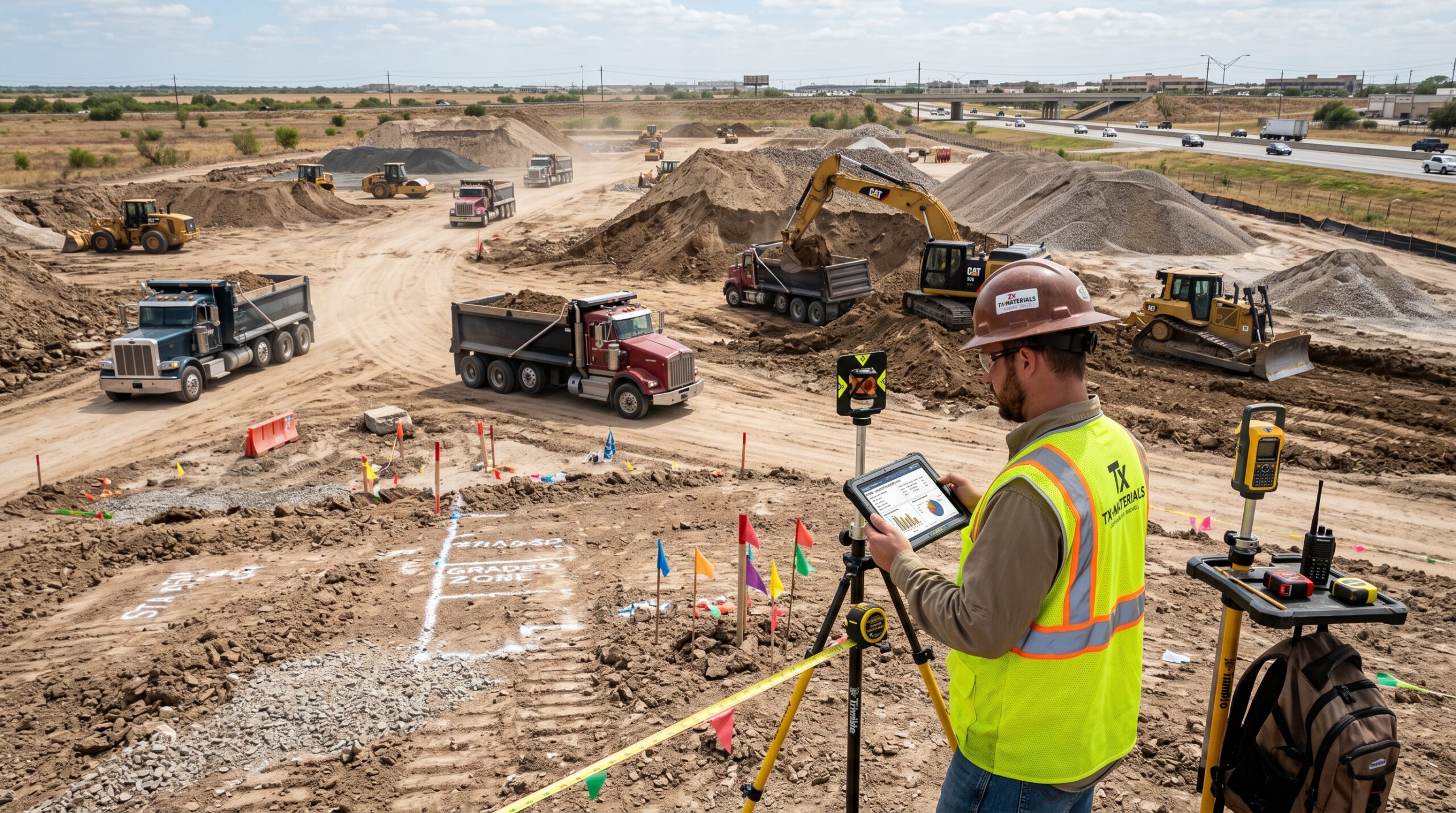
Estimating bulk material quantities for Texas construction projects is one of those tasks that can quietly make or break your budget. Order too little, and your crew sits idle waiting for deliveries. Order too much, and you’re stuck paying for excess material, hauling, and wasted storage space. In a state like Texas, where projects stretch across Dallas–Fort Worth, Houston, Austin, and San Antonio, getting your numbers right is essential.
Whether you’re preparing a residential pad site, a commercial development, or a roadway project along I-35 or SH 99, accurate estimation helps you control costs, streamline logistics, and keep timelines intact. Let’s walk through how contractors actually approach bulk material quantities for Texas construction projects, without overcomplicating the process.
Start with Site Measurements and Project Scope
Everything begins with understanding your site. You can’t estimate bulk material quantities for Texas construction projects without knowing the exact dimensions of the area you’re working on. That means measuring length, width, and depth across the entire job site, not just guessing based on plans.
In Texas, soil conditions vary significantly. A project in Houston may require additional fill due to soft, moisture-heavy soil, while a North Texas site might need less material but more compaction effort. That’s why contractors often double-check grading plans and elevation requirements before running calculations.
The standard formula most crews use is simple:
Length × Width × Depth = Volume (in cubic feet)
Then divide by 27 to convert into cubic yards, the unit most suppliers use. This step alone lays the foundation for accurate bulk material quantities for Texas construction projects, especially when dealing with large-scale earthwork.
Understand Material Types and Their Impact on Volume
Not all materials behave the same way. Fill dirt, select fill, gravel, and sand each have different densities and compaction properties, which directly affect how much you’ll need.
Why Material Choice Changes Your Estimate
For example, select fill compacts more tightly than common fill. That means you may need to order extra volume to account for compaction loss. Similarly, gravel used for road base along highways like I-10 or US-75 may require a thicker layer to meet load-bearing requirements.
When estimating bulk material quantities for Texas construction projects, contractors often factor in:
- Compaction rates (typically 10-20% extra)
- Moisture content
- Soil shrink/swell behavior
- Project specifications (TxDOT standards in many cases)
If you skip this step, your estimate may look right on paper but fail in the field.
Use Conversion Factors and Density Calculations
Here’s where things get slightly more technical, but still manageable. Many contractors convert cubic yards into tons when ordering materials, especially aggregates.
Different materials have different weights:
- Fill dirt: ~2,000-2,700 lbs. per cubic yard
- Gravel: ~2,700-3,000 lbs. per cubic yard
- Sand: ~2,600-3,100 lbs. per cubic yard
These variations matter when calculating bulk material quantities for Texas construction projects, especially if your supplier prices by ton instead of volume.
For a reliable reference, many contractors align estimates with guidelines from the Texas Department of Transportation, which provides specifications for material density, compaction, and usage across infrastructure projects.
Account for Waste, Overage, and Real-World Conditions
Even the most precise calculations won’t account for everything. That’s why experienced contractors always add a buffer when estimating bulk material quantities for Texas construction projects.
Why Adding Extra Material Is Smart Planning
Real job sites aren’t perfect. You may deal with uneven terrain, unexpected soil conditions, or weather delays that impact material usage. Rain, for example, can increase moisture content and reduce compaction efficiency, especially in Gulf Coast regions.
Most contractors add:
- 10% overage for standard projects
- 15-20% for complex or large-scale developments
This ensures you don’t run short mid-project, which can be far more expensive than ordering slightly extra upfront.
Coordinate Delivery and Sourcing Efficiently
Once you’ve calculated your needs, the next step is sourcing and scheduling deliveries. This is where many estimates fall apart, because logistics weren’t considered early enough.
Hauling distance plays a major role in cost. A supplier 20 miles away may be far more economical than one 60 miles out, even if their base price is slightly higher. For projects near major corridors like I-35 or Beltway 8, choosing nearby suppliers can significantly reduce trucking expenses.
To simplify sourcing, many contractors use platforms like Borrow-Pit to compare local availability and pricing. You can explore material options through the dirt listings category, learn more about the platform on the About page, or coordinate supply needs directly via the Contact page.
Using a centralized marketplace makes managing bulk material quantities for Texas construction projects far more efficient, especially when timelines are tight.
Final Thoughts
Estimating bulk material quantities for Texas construction projects isn’t just about math, it’s about understanding materials, site conditions, and logistics. From measuring your site correctly to accounting for compaction and delivery factors, each step plays a role in keeping your project on track.
Across Texas, where construction demand continues to grow in cities like Dallas, Houston, Austin, and San Antonio, contractors who master estimation gain a clear advantage. They reduce waste, control costs, and avoid delays that can derail even the best-planned jobs.
If you’re preparing for an upcoming project, take the time to calculate carefully, factor in real-world conditions, and source materials strategically. You can search listings near you to find available materials or list your material if you have excess supply to share with other contractors.
FAQs
How do you estimate bulk material quantities for construction projects?
Measure the site (length, width, depth), calculate volume in cubic yards, and adjust for compaction and material type.
What is the most common unit for bulk material in Texas?
Cubic yards are most common, but some suppliers also price by ton depending on the material.
How much extra material should I order?
Most contractors add 10-20% extra to account for waste, compaction, and site conditions.
Why does material type affect quantity estimates?
Different materials compact differently and have varying densities, which impacts how much is needed.
Where can I source bulk materials after estimating quantities?
You can find and compare suppliers through platforms like Borrow-Pit, which connects contractors with local material listings.