Understanding how hauling distance affects bulk material costs in Texas is critical for contractors, developers, and project managers working across the state. Whether you’re sourcing aggregates in Dallas–Fort Worth, moving fill dirt near Houston’s Beltway 8, or coordinating deliveries along Austin’s SH 130 corridor, distance plays a bigger role in pricing than most people initially expect.
Bulk materials like gravel, sand, crushed concrete, and fill dirt are relatively low-cost per unit, but transporting them is where expenses quickly add up. That’s why experienced contractors don’t just look at material price, they evaluate total delivered cost. In many cases, the difference between profit and loss comes down to how efficiently materials are sourced and transported.
Why Hauling Distance Is a Major Cost Factor in Texas Projects
Texas is massive, and that scale directly impacts logistics. Moving bulk materials even 20-50 miles can significantly increase project costs, especially when multiple truckloads are required.
Fuel, Labor, and Time Drive Transportation Costs
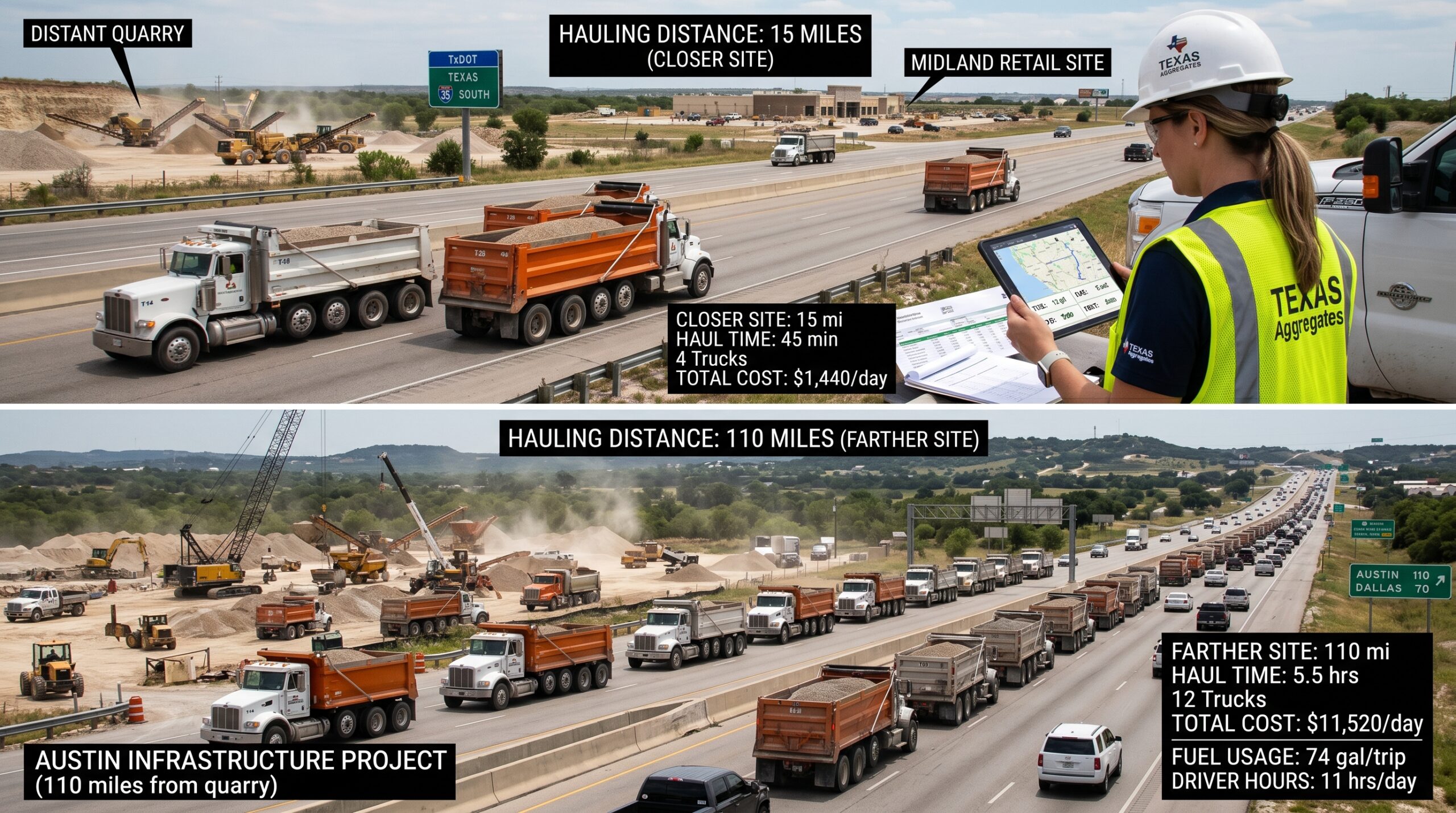
The farther materials need to travel, the higher the cost per load. Fuel consumption increases, drivers spend more time on the road, and equipment experiences more wear and tear.
For example, hauling aggregates from a quarry outside San Antonio to a job site in Austin may seem manageable, but when multiplied across dozens of loads, the cost difference becomes substantial. This is exactly how hauling distance affects bulk material costs in Texas on real-world projects.
Cost Per Mile Adds Up Quickly
Many hauling companies calculate pricing based on distance, often charging per mile or per load depending on the material. Even a small increase in distance can translate into thousands of dollars over the course of a large project.
Contractors working along major routes like I-35, I-45, or I-10 often prioritize nearby suppliers to minimize these incremental costs. Understanding how hauling distance affects bulk material costs in Texas helps teams make smarter sourcing decisions early in the planning phase.
Local Sourcing vs Long-Distance Hauling: What Contractors Prefer
One of the most effective ways to control costs is by sourcing materials as close to the job site as possible.
The Advantage of Local Material Suppliers
Local sourcing reduces transportation time, lowers fuel costs, and improves delivery efficiency. In fast-growing areas like Frisco, Katy, and New Braunfels, contractors actively look for nearby suppliers to avoid long-haul expenses.
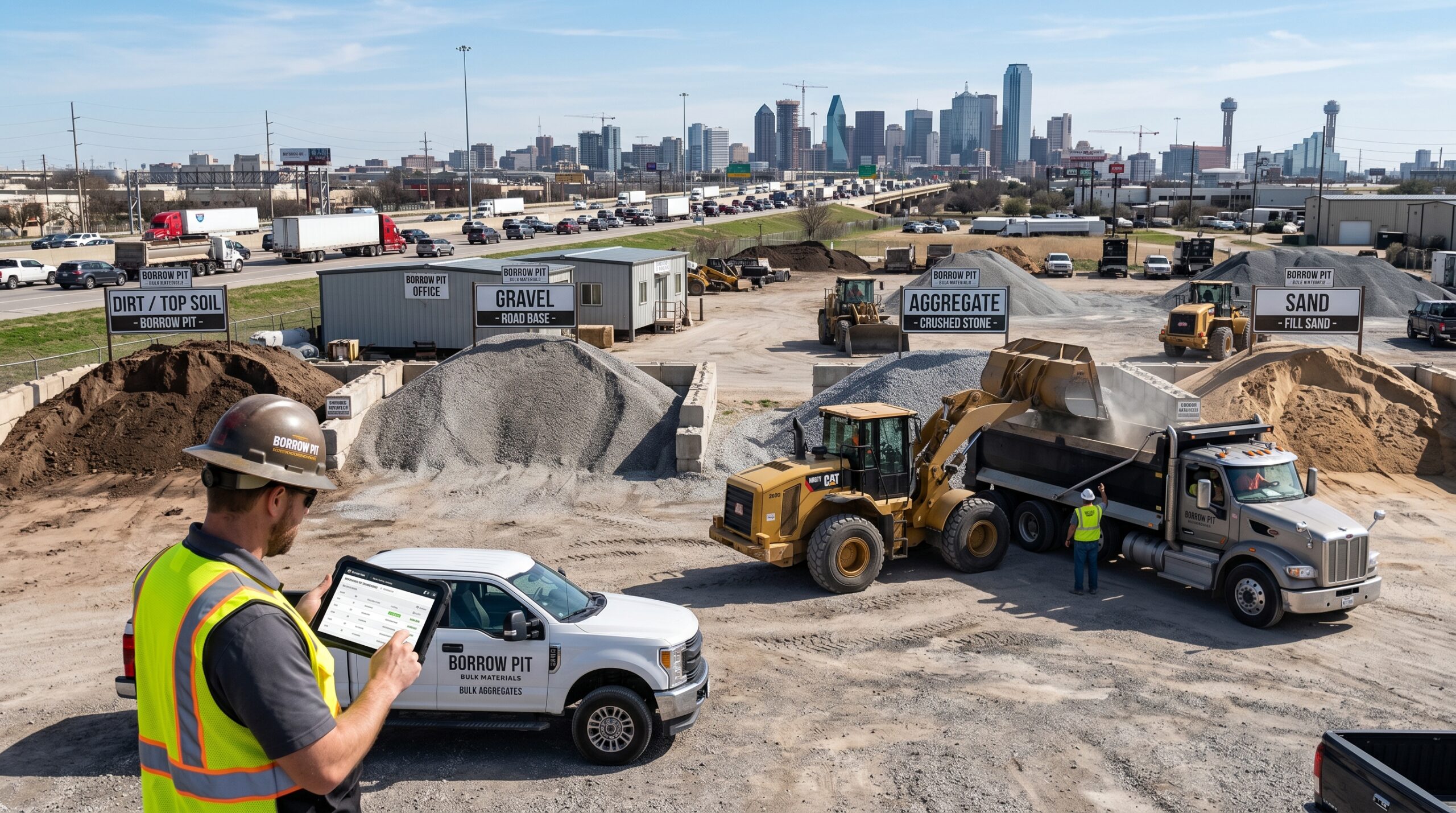
This is why many professionals rely on platforms like Borrow-Pit to find materials close to their project location. Instead of committing to a single supplier, they can compare options and choose the most cost-effective source. You can explore available suppliers through the About page or coordinate your needs via the Contact page.
Using local sources is one of the most practical ways to minimize how hauling distance affects bulk material costs in Texas.
When Long-Distance Hauling Makes Sense
There are situations where sourcing from farther away is necessary, such as when specific material types or quality standards are required. For example, select fill or specialized aggregates may not always be available locally.
In these cases, contractors must balance material quality against increased transportation costs. Even then, understanding how hauling distance affects bulk material costs in Texas helps ensure that decisions are based on total value, not just availability.
Traffic, Routes, and Delivery Efficiency in Texas Cities
Distance isn’t the only factor, traffic and route conditions also play a major role in delivery costs.
Urban Congestion Impacts Delivery Cycles
In cities like Houston and Dallas, traffic congestion can significantly reduce the number of loads delivered per day. Fewer trips mean higher effective costs per load.
For example, a supplier located 25 miles away might seem ideal, but if traffic delays double travel time, the cost advantage disappears. This is another way hauling distance affects bulk material costs in Texas, beyond simple mileage calculations.
Highways and Infrastructure Influence Costs
Projects located near major highways like US-75, Loop 1604, or SH 99 often benefit from faster delivery times and reduced costs. Efficient routes allow trucks to complete more trips per day, improving overall project efficiency.
The Texas Department of Transportation provides ongoing updates on road conditions and infrastructure projects, which can also impact hauling routes and timelines.
Strategies to Reduce Hauling Costs on Texas Job Sites
Smart contractors don’t just accept hauling costs, they actively work to reduce them.
Source Materials Closer to the Job Site
The simplest strategy is to minimize distance. Even if the per-unit material cost is slightly higher, choosing a nearby supplier often results in lower total project costs.
This approach directly addresses how hauling distance affects bulk material costs in Texas by reducing transportation expenses.
Optimize Delivery Scheduling
Coordinating deliveries during off-peak traffic hours can improve efficiency and reduce delays. Staggering deliveries also prevents job site congestion and keeps operations running smoothly.
Use Multiple Supply Sources
For large projects, relying on a single supplier may not be practical. Contractors often source from multiple locations to ensure consistent supply while minimizing hauling distances.
Final Thoughts
There’s no way around it, hauling distance affects bulk material costs in Texas more than almost any other factor. From fuel prices and labor to traffic and route efficiency, transportation plays a major role in overall project budgeting.
Contractors who understand this dynamic can make better sourcing decisions, reduce unnecessary expenses, and improve project timelines. Whether you’re working in Dallas–Fort Worth, Houston, Austin, or San Antonio, prioritizing proximity and logistics can deliver significant cost savings.
If you’re planning a project, take the time to evaluate your sourcing strategy. You can search listings near you to find local suppliers and reduce hauling distances, or list your material if you have excess supply available.
FAQs
How does hauling distance impact material costs?
Longer distances increase fuel usage, labor time, and equipment wear, raising the overall cost per load.
What is the best way to reduce hauling costs in Texas?
Sourcing materials closer to the job site is the most effective way to minimize transportation expenses.
Do all suppliers charge based on distance?
Most hauling companies factor distance into pricing, either per mile or per load.
Is local sourcing always cheaper?
In most cases, yes, but material quality and availability can sometimes require longer-distance sourcing.
Why do traffic conditions matter for hauling costs?
Traffic delays reduce the number of deliveries per day, increasing the effective cost per load.