When comparing Crushed Stone vs Gravel in Texas, the choice isn’t as simple as picking what’s cheaper or more available. Each material behaves differently under pressure, weather, and traffic, especially in a state known for expansive soils, heavy rain in some regions, and extreme heat in others.
Whether you’re building a driveway in Austin, preparing a construction pad in Houston, or installing an access road in North Texas, understanding the real difference between Crushed Stone vs Gravel can help you avoid costly mistakes. The right aggregate doesn’t just support your project, it determines how long it lasts.
Understanding the Difference Between Crushed Stone and Gravel
Before deciding which material performs better, it’s important to understand what separates the two. While both fall under the category of construction aggregates, their formation and structure are very different.
What is Crushed Stone?
Crushed stone is produced by mechanically breaking down larger rocks like limestone or granite. This process creates angular edges that allow the material to lock together when compacted.
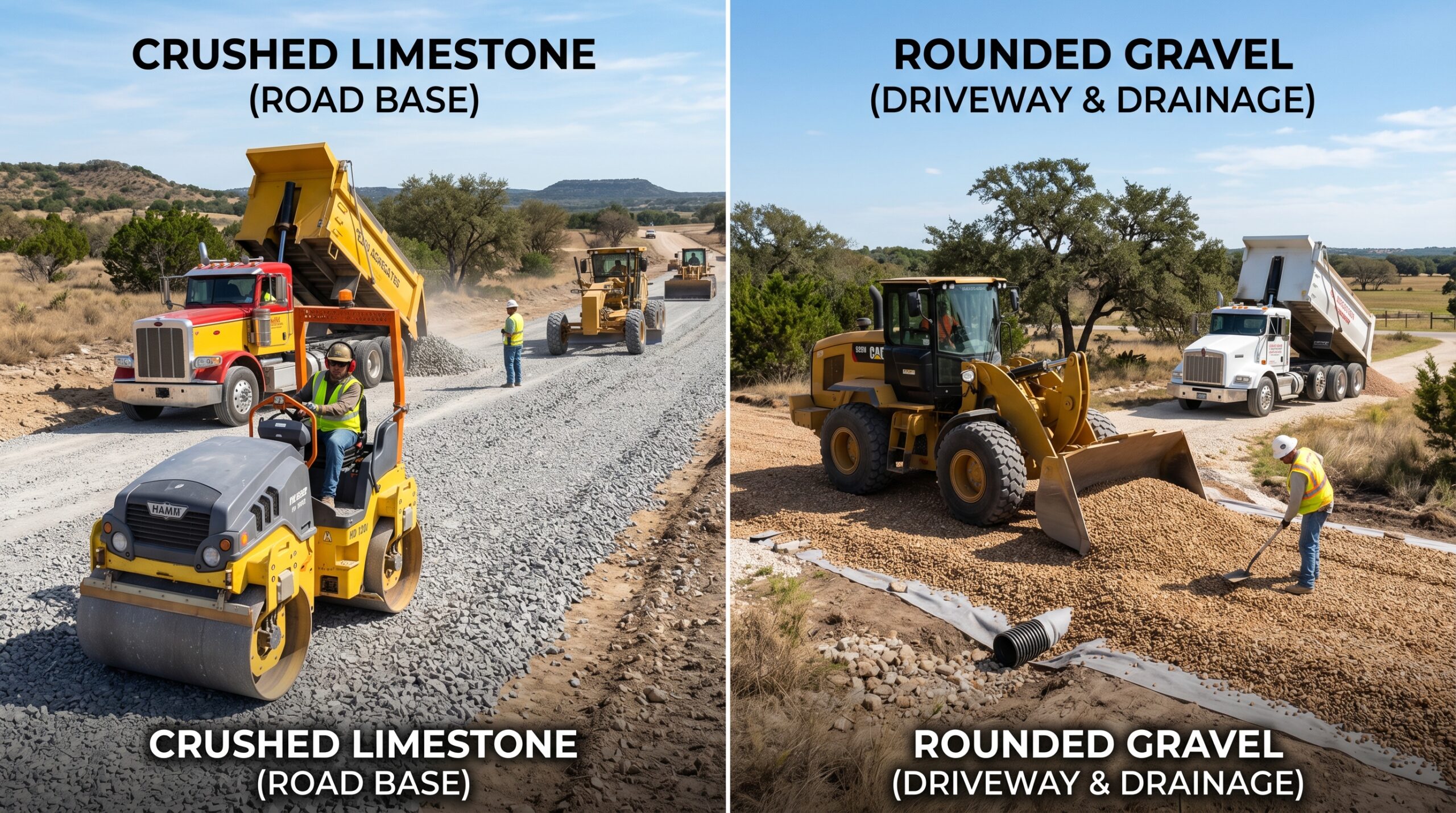
In Texas, crushed limestone is one of the most common options, especially for road base and foundation work. Its structure makes it ideal for projects requiring strength and stability.
What is Gravel?
Gravel, on the other hand, is naturally formed through erosion. Over time, water smooths the edges of stones, resulting in rounded particles.
This rounded shape improves drainage but reduces compaction. That’s why the difference between crushed stone and gravel becomes critical when choosing materials for structural applications.
Performance Comparison: Crushed Stone vs Gravel
Now that the basics are clear, let’s look at how Crushed Stone vs Gravel performs in real-world Texas conditions. From Dallas highways to rural roads near San Antonio, performance varies based on use.
Compaction and Stability
If stability is your priority, crushed stone typically outperforms gravel. Its angular edges interlock, creating a solid base that can handle heavy loads.
This is why contractors often prefer crushed stone for:
- Road base layers
- Foundation preparation
- High-traffic construction zones
Gravel, while useful, doesn’t compact as tightly. Over time, it can shift under pressure, especially in areas with frequent vehicle movement.
Drainage and Water Flow
Here’s where gravel shines. Its rounded shape creates natural gaps, allowing water to pass through easily. In regions like Houston or coastal Texas, where heavy rainfall is common, gravel is often used for drainage layers or erosion control.
So, when evaluating Crushed Stone vs Gravel, the decision often comes down to whether you prioritize strength or drainage.
Best Use Cases for Each Material in Texas
Choosing between Crushed Stone vs Gravel depends heavily on your project type. Different applications call for different performance characteristics.
Crushed Stone for Construction and Road Base
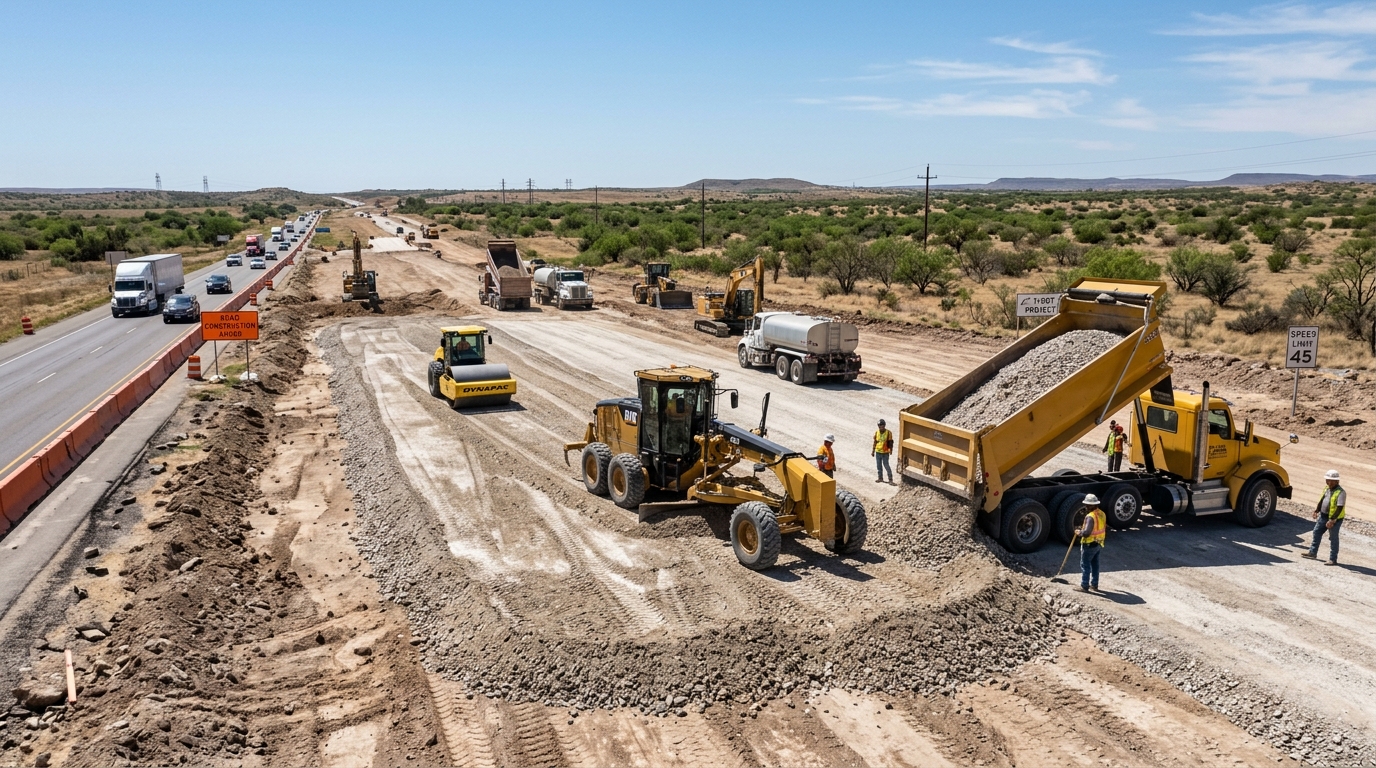
Crushed stone is widely used across Texas for structural applications. In fast-growing areas like Frisco, Katy, and Round Rock, it’s a go-to material for:
- Subdivision roads
- Commercial building pads
- Highway base layers
Its ability to compact tightly makes it ideal for supporting heavy loads and long-term durability.
Gravel for Driveways and Drainage Projects
Gravel is more commonly used for residential or light-duty applications. For example:
- Driveways in rural areas
- Decorative landscaping
- Drainage systems
When considering crushed stone vs gravel for driveways Texas, many homeowners choose a combination, using crushed stone as a base and gravel as a top layer.
Cost Differences: Gravel vs Crushed Stone in Texas
Cost is always a factor, especially for large-scale projects. When comparing gravel vs crushed stone cost Texas, the price difference often depends on location and availability. Gravel is sometimes cheaper because it requires less processing. However, crushed stone may offer better long-term value due to its durability and reduced maintenance needs.
Another major factor is hauling distance. According to the Federal Highway Administration, transportation costs can significantly impact material pricing, especially for bulk aggregates. This means a nearby supplier offering crushed stone could actually be more cost-effective than distant gravel sources.
Sourcing Aggregates Efficiently in Texas
Finding the right supplier plays a huge role in both cost and performance. Contractors sourcing Crushed Stone vs Gravel often look beyond traditional yards to compare multiple options.
Instead of relying on a single supplier, many now use platforms like Borrow-Pit to evaluate availability across different locations. This helps reduce hauling distance and improves pricing transparency.
You can browse available materials through the aggregate listings section, learn more about sourcing through the About page, or coordinate deliveries via the Contact page. This flexible approach is especially useful for projects across Dallas–Fort Worth, Houston, Austin, and San Antonio.
Regional Considerations Across Texas
Texas isn’t uniform, and neither are its material needs. The Crushed Stone vs Gravel decision often depends on where your project is located.
In North Texas, crushed limestone dominates due to availability and demand for stable road bases. Central Texas also relies heavily on limestone, while coastal regions like Houston prioritize drainage-friendly materials like gravel.
Understanding these regional differences ensures you choose a material that performs well under local conditions.
Final Thoughts: Which Material Performs Better?
So, when it comes to Crushed Stone vs Gravel, which one wins? The answer depends on your project. If you need strength, durability, and compaction, crushed stone is usually the better choice. If drainage and cost are your priorities, gravel may be more suitable. In many cases, the best solution isn’t choosing one over the other, it’s using both strategically.
If you’re planning a project, take time to evaluate your needs and explore local options. You can search listings near you to find the best material sources or list your material if you’re supplying aggregates across Texas.
FAQs
What is the main difference between crushed stone and gravel?
Crushed stone is mechanically broken with angular edges, while gravel is naturally rounded and smoother.
Which is better for driveways in Texas?
Crushed stone provides a more stable base, but gravel is often used as a top layer for appearance and drainage.
Is crushed stone more expensive than gravel?
It can be slightly more expensive, but it often offers better long-term value due to durability.
Which material is better for drainage?
Gravel performs better for drainage because of its loose structure and water permeability.
Can you use both materials together?
Yes, many projects use crushed stone as a base and gravel on top for a balanced solution.